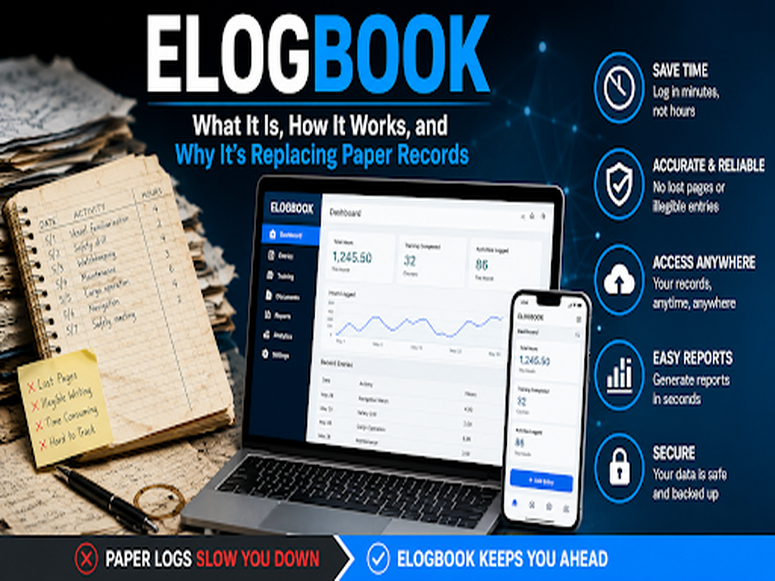
If you are still tracking hours, training or activity in a paper notebook you’re doing more work than you need to. An elogbook does the same job in a fraction of the time with none of the lost pages or illegible handwriting that come with the old method.
This guide breaks down exactly what an elogbook is how it compares to paper and basic spreadsheet tracking and what features actually matter when you’re choosing one. By the end you’ll know whether switching to a digital logbook makes sense for your situation.
Most people don’t realize how much time gets wasted re explaining or re submitting paper logs that got smudged, misplaced or filled out in a rush. An elogbook removes that uncertainty entirely giving you one clean record that’s accurate the moment you enter it.
What Is an Elogbook Exactly?
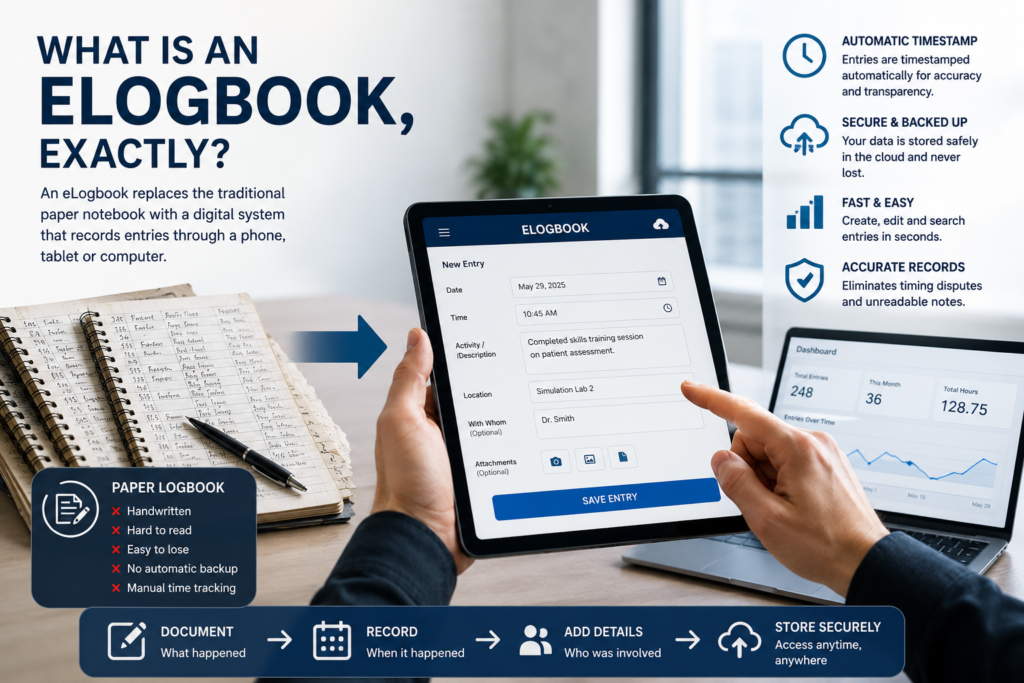
An eLogbook replaces the traditional paper notebook with a digital system that records entries through a phone, tablet or computer. Instead of writing by hand, users type, tap or scan information directly into an app or web platform built for this exact purpose.
The core idea hasn’t changed from paper logbooks you’re still documenting what happened, when and sometimes with whom. What’s different is the format, the speed and what happens to that data after it’s recorded.
Most electronic logbook systems also timestamp entries automatically which removes a major source of disputes in fields where accurate timing matters like medical training hours or commercial driving logs. That single feature alone solves a problem paper never could.
Why Young Professionals and Students Are Switching to Digital Logbooks?
The shift toward online logbooks isn’t just about convenience it reflects how an entire generation already manages everything else in their lives. Paper feels like an unnecessary extra step when every other part of school, work and training already happens on a screen.
Students juggling clinical placements, apprenticeships or driving hours often need to submit logs to multiple supervisors or institutions. A digital logbook lets them do this instantly without scanning paper or mailing physical copies across departments.
There’s also the simple fact that phones are already in everyone’s pocket. Logging an entry takes seconds when the app is right there compared to digging out a notebook that may or may not have been carried that day.
Paper Logbook vs. Digital Logbook: A Direct Comparison
This comA paper logbook requires every entry to be written by hand which makes the process slower and more time consuming. A digital logbook allows users to enter information quickly by typing or tapping making daily record keeping much more efficient.
Paper logbooks can easily be lost damaged or misplaced and sharing records usually requires physical copies. Digital logbooks are typically backed up to the cloud allowing secure storage and instant sharing with colleagues or team members.
Making changes in a paper logbook often results in crossed out entries that can look untidy. A digital logbook keeps edits clean and organized while also offering searchable records and automatic timestamps for greater accuracy and easier tracking.
parison makes the practical gap clear. A paper system depends entirely on the user’s memory and discipline while an electronic logbook builds accuracy and accessibility directly into the process.
Real Use Cases for an Elogbook
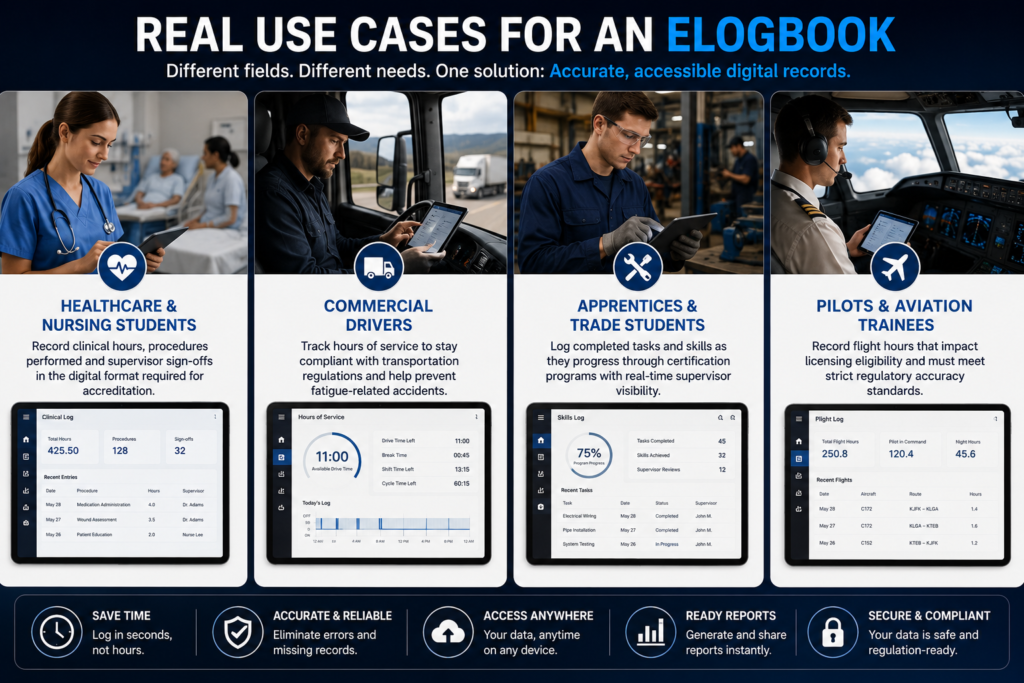
Different fields use eLogbooks for very different purposes but the underlying need accurate accessible records stays the same across all of them.
Healthcare and nursing students
use digital logbooks to record clinical hours, procedures performed and supervisor sign offs which institutions often require in a specific digital format for accreditation purposes.
Commercial drivers
rely on electronic logbooks to track hours of service a requirement enforced by transportation regulators in many countries to prevent fatigue related accidents on the road.
Apprentices and trade students
log completed tasks and skills as they progress through certification programs giving supervisors a real time view of readiness instead of waiting for a final paper review.
Pilots and aviation trainees
use online logbooks to record flight hours which directly affect licensing eligibility and must meet strict regulatory accuracy standards.
Features That Matter in a Good Elogbook
Not every digital logbook is built the same way, and choosing the wrong one can recreate the same frustrations paper was supposed to solve. A few features separate genuinely useful tools from ones that just look modern.
- Offline entry capability
- Automatic timestamps
- Export options
- Supervisor or instructor sign off
- Cloud backup
A 2023 review of digital record keeping tools in vocational training found that platforms with automatic timestamping reduced reported logging errors significantly compared to manually entered systems reinforcing why this single feature carries so much weight in fields with compliance requirements.
Common Mistakes People Make With Digital Logbooks
Switching to an electronic logbook solves a lot of problems but only if it’s used correctly. A few habits tend to undermine the benefits people expected to get from going digital in the first place.
- Logging entries days later
- Choosing an app without offline support
- Ignoring backup settings
- Skipping supervisor verification steps
- Overcomplicating entries
Myth vs. Fact: Elogbooks
Myth:Digital logbooks aren’t accepted by official institutions or regulators.
Fact: Most accreditation bodies, transportation regulator and healthcare institutions now accept or even require electronic logs provided the platform meets their specific formatting and verification standards.
Myth: An online logbook is less secure than a paper one.
Fact: Reputable digital logbook platforms use encrypted cloud storage which is generally far more secure than a notebook that can be lost, stolen or damaged.
Myth: Switching to digital takes too long to learn.
Fact: Most elogbook apps are designed around simple tap and type entry with most new users comfortable within their first few sessions.
Expert Insight
According to workforce training consultant Daniel Pink’s work on motivation, people are far more consistent with habits when friction is reduced much like how MassMutual Okta simplifies digital access.
Logging an activity in seconds rather than minutes is exactly the kind of friction reduction that drives real behavioral change which is precisely why electronic logbooks see higher completion rates than their paper counterparts.
How to Choose the Right Elogbook for Your Needs?
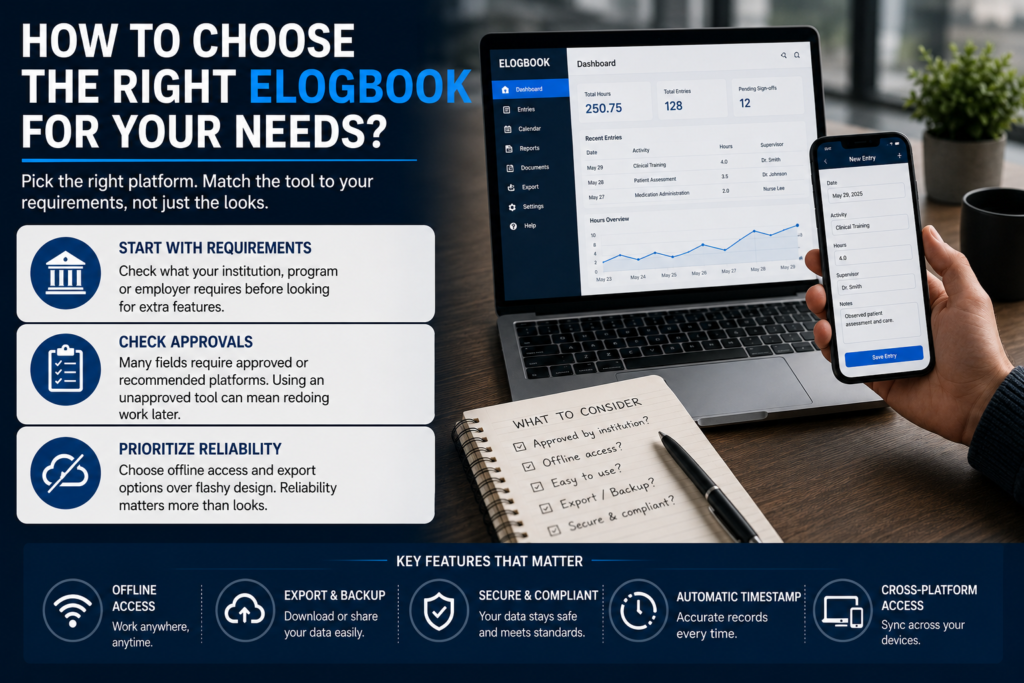
Picking the right platform comes down to matching the tool to your specific requirements rather than choosing whichever app looks the most polished. Start with what your institution or employer actually requires before adding extra features to the list.
Check whether your school, training program or regulator has an approved or recommended digital logbook system since some fields mandate specific platforms for compliance reasons. Using an unapproved tool can mean redoing work later in the required format.
If you have flexibility in your choice prioritize offline functionality and export options above flashy design. A logbook that looks great but loses entries without signal will cause more problems than the paper system it was meant to replace.
Conclusion
An elogbook solves the core problems that paper logbooks always struggled with lost pages, illegible entries and slow sharing with supervisors or institutions.
Whether you’re a student, apprentice or driver, switching to a digital logbook means faster entries and searchable records. Through smart platforms like Newtopy the right online logbook turns a tedious requirement into a quick daily habit instead of a source of stress.
FAQs
What is the main difference between an elogbook and a regular logbook?
An elogbook records entries digitally through an app or website, while a regular logbook is handwritten on paper. The digital version adds automatic timestamps, backups, and instant sharing capabilities.
Are electronic logbooks legally accepted for licensing or certification?
In most fields, yes. Healthcare, aviation and transportation regulators widely accept digital logs, though the specific platform sometimes needs to meet their approved formatting standards.
Can I use a digital logbook without internet access?
Many platforms support offline entry, saving your data locally and syncing automatically once you reconnect. Always check this feature before relying on an app for fieldwork or remote locations.
How secure is my data in an online logbook?
Reputable platforms use encrypted cloud storage with regular backups, making digital logs generally more secure against loss than a single physical notebook.
Do I need special training to use an elogbook app?
No. Most platforms are designed for quick, intuitive entry, and the majority of new users become comfortable within their first few uses without formal training.
Is it true that digital logbooks can be easily edited or falsified?
This is a common misconception. Most professional electronic logbook platforms track edit history and timestamps, making changes visible rather than hidden which actually makes tampering harder than with paper.