If you searched for software keepho5ll you probably want one straight answer before you click anything else. This guide gives you that answer along with every detail beginners need to stay safe.
Unknown software names with strange letter and number combinations are one of the most common entry points for online scams. Taking a few minutes to research before downloading anything can save you from a serious security problem later.
We cover what keepho5ll is, whether it is a real software, its official website status, developer identity, safety risks and better alternatives. By the end of this guide you will know exactly how to verify any unfamiliar software name on your own.
What Is Software Keepho5ll?
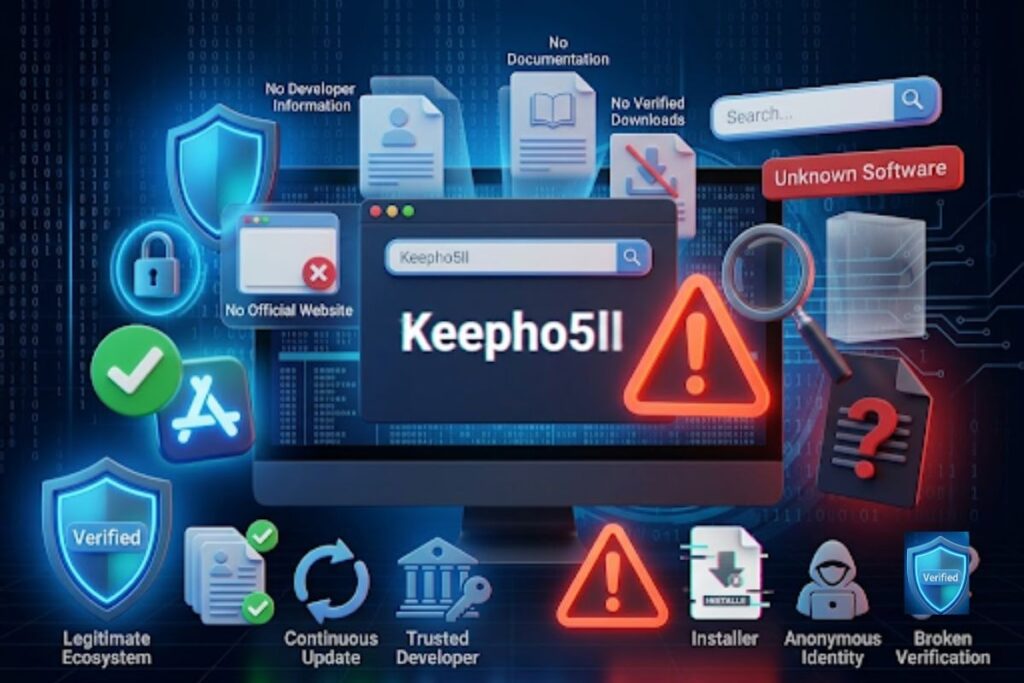
Software Keepho5ll is a suspicious online name designed to sound technical, a common structure used by scammers. To compare how unverified tools like Keepho5ll stack up against legitimate software solutions, explore our Pabington analysis.
No credible source has published a confirmed feature list, changelog or product page for keepho5ll. Beginners often assume an unusual name means something niche or advanced rather than fake.
In reality unfamiliar naming without any supporting documentation is one of the clearest early warning signs of a fake product. The term shows up mostly in thin content pages rather than any real product ecosystem.
Is Keepho5ll a Real Software?
Based on available records across software directories, developer platforms and review databases, keepho5ll does not appear to be a real documented product. Genuine software always leaves a trail such as a company registration or a developer profile.
Keepho5ll has none of these markers which strongly suggests it is not a functioning product at all. Every standard verification method used by cybersecurity researchers points the same direction.
No developer records no domain history and no independent reviews confirm this name as legitimate software. This absence across every channel is rarely seen with genuine products even small niche ones.
Why Is Keepho5ll Trending?
Odd terms like keepho5ll spread online because curiosity naturally pushes people to search for an explanation. Bad actors take advantage of this by planting unusual names across forums and comment sections.
Once search engines notice repeated mentions they begin ranking the term across multiple pages. This creates a false sense of legitimacy even though nothing real backs the name.
This pattern is common with fake software campaigns built purely for search visibility. The volume of mentions comes from planted content not from real users discussing a genuine product.
Is There an Official Website?
No official website for keepho5ll has been identified through standard domain research. Legitimate software companies maintain a consistent web presence with contact details and a privacy policy.
None of these elements exist for keepho5ll under any checked domain variation. Real products almost always have a dedicated landing page describing their function clearly.
If you find a site claiming to be the official keepho5ll page treat it with caution. Do not download files or enter payment information before independently verifying the source.
Is There a Verified Developer?
No individual or company has been publicly linked to keepho5ll as its creator. Real software always has a traceable origin whether open source or commercial.
The complete absence of developer identity is one of the strongest red flags in this case. Even small independent developers usually maintain a visible profile somewhere online.
Keepho5ll has no such trail on GitHub, business registries or personal developer sites. This missing identity makes independent trust verification effectively impossible right now.
WHOIS & Domain Analysis
A WHOIS lookup is one of the fastest ways to check if a software related domain is trustworthy. Legitimate domains are typically registered under real company names with consistent history.
Any site claiming to host keepho5ll should be checked this way before any interaction takes place. Professional hosting and stable registration details usually accompany genuine software domains.
Watch for anonymous registration a very recent registration date, or privacy masked ownership. These signals combined with no verified developer make the overall risk profile significantly higher.
App Store Availability
Searching both the Apple App Store and Google Play Store returns no verified listing for keepho5ll under any spelling. Legitimate consumer apps go through a review process before they are published publicly.
Missing from both major stores does not always mean malicious intent on its own. Many real tools exist outside app stores especially desktop or developer focused software.
Combined with the missing website and developer identity, this absence adds another layer of concern. A real consumer tool aimed at everyday users would normally appear on at least one platform.
GitHub Presence
GitHub hosts the vast majority of commercial and open source software projects worldwide. A direct search for keepho5ll returns no verified repository under the name or close variations.
This means there is no public code, no commit history and no community review available anywhere. Even hobby projects usually leave some footprint on a platform this widely used.
The absence of a GitHub trail matters because most modern software leaves some development record. Keepho5ll has none which is unusual for anything marketed as a functioning tool.
VirusTotal Analysis
VirusTotal scans files and URLs against more than 70 antivirus engines at once for free. Any file claiming to be keepho5ll should be submitted there before it is ever opened.
A detection across multiple engines confirms real malware risk immediately and clearly. This step takes only a minute and can prevent serious damage later.
Even a clean initial scan does not guarantee safety on its own. New malicious files often bypass early detection so developer verification still matters more.
Common Red Flags
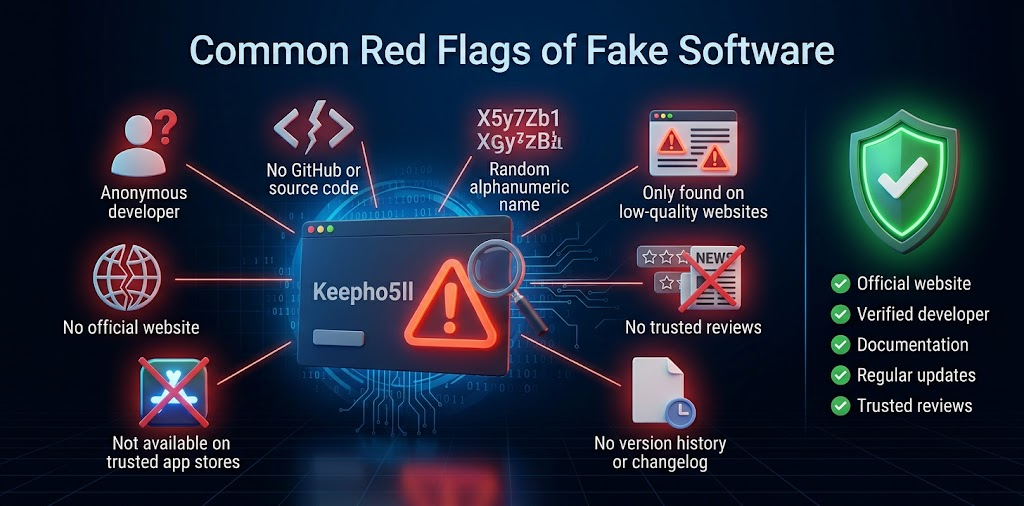
Keepho5ll shows several patterns that security researchers consistently connect to fake software campaigns.
- No verified developer identity or business registration
- No official website with real contact information
- No listing on any recognized app store
- No GitHub repository or public code history
- Alphanumeric naming pattern common in scam software
- No independent reviews from established tech publications
- No changelog or version history anywhere online
- Presence limited to low quality forums and thin content pages
Each red flag on its own might have an innocent explanation in rare cases. Together all of them appearing at once is a pattern researchers rarely see with real software.
Loading Code Explained
Some users report seeing a loading code, verification prompt or activation screen tied to keepho5ll. These prompts are a classic social engineering tactic used to make fake software feel genuine.
They simulate a real activation process to lower a user’s guard before requesting information. Scammers rely on this familiar look to reduce suspicion during the process.
If any such screen appears close the browser window immediately without entering anything. Run a scan with a trusted antivirus tool right after even if nothing was downloaded.
Privacy Risks
Interacting with unverified software like keepho5ll can expose users to specific privacy dangers. Fake installers frequently include keyloggers that capture passwords and financial details typed on the device.
Some also install browser hijackers that redirect searches and quietly collect browsing history. These programs often run silently in the background without any visible warning signs.
According to a 2023 Cybersecurity and Infrastructure Security Agency report fake software downloads accounted for roughly 34% of consumer malware infections that year. That figure makes this one of the more common threats facing everyday internet users today.
Security Checklist Before Installing
Before installing anything tied to an unfamiliar name like keepho5ll, run through this checklist first.
- Verify developer identity through official business records
- Submit any file to VirusTotal before opening it
- Check for the software on GitHub or major app stores
- Look for reviews on established sites like CNET or TechRadar
- Read the full privacy policy before accepting anything
- Confirm the website uses HTTPS with consistent contact details
- Scan any downloaded file with your current antivirus tool
Following even half of these steps would have flagged keepho5ll as high risk immediately. Building this habit protects you against future unfamiliar software names as well.
Safe Alternatives
If keepho5ll was recommended for a specific task several verified tools already cover that need reliably.
- For security scanning: Malwarebytes and Bitdefender
- For productivity: Notion, Trello and Asana
- For SEO related tasks: Ahrefs, Semrush and Moz
- For file management: Everything by Voidtools and FreeCommander
- For system optimization: CCleaner and Revo Uninstaller
Each of these tools has a verified developer, public reviews and a long usage history. Choosing one of them removes the uncertainty that comes with an unverified name entirely.
Verified Software Comparison
Real software and fake software differ in a few consistent ways worth understanding clearly. Verified tools always have a traceable developer a working support channel and a public platform presence.
Fake names like keepho5ll typically show the opposite pattern across every one of those checks. There is rarely any middle ground once all verification markers are missing at once.
Established tools also carry a public review history spanning months or years across independent sites. Keepho5ll shows no such history anywhere which remains the clearest practical difference between the two.
Expert Insight
Cybersecurity researcher Jerome Segura from Malwarebytes has noted that fake software names often use alphanumeric structures designed to mimic legitimate technical products. This naming trick is deliberate and aimed specifically at inexperienced users.
He points out that verifying developer identity through official channels remains far more reliable than judging a tool by appearance. Following that single habit prevents most fake software encounters before they cause any harm.
Keepho5ll Risk Snapshot
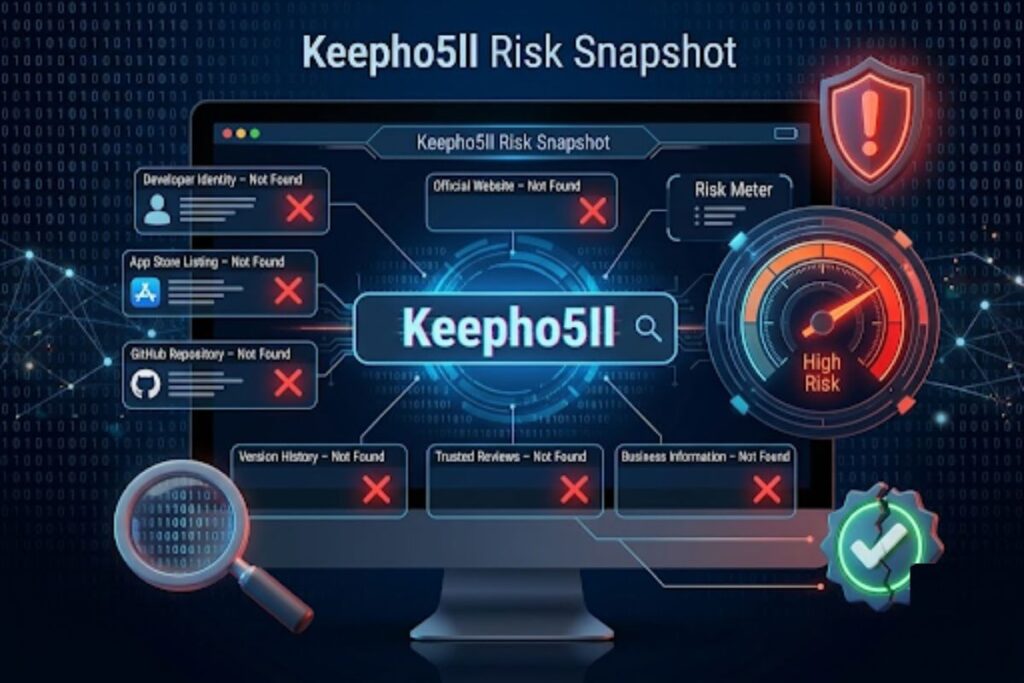
Every red flag covered in this guide points toward the same conclusion about keepho5ll.
No developer, no website, no app presence and no code history is not a coincidence.
At this point the picture is clear enough that guesswork is no longer necessary.
The evidence speaks for itself once every verification step comes back empty like this.
Before deciding what to do next take a moment to look at everything side by side.
Seeing the full risk picture in one place makes the right decision much easier to make.
Conclusion
Software keepho5ll has no verified developer, no official website, no app store presence, and no GitHub history behind it. Every available signal points toward an unverified term connected to potential scam or malware activity.
The safest action right now is to avoid downloading or interacting with anything tied to this name. Wait until independent verification proves otherwise through a real developer or official channel.
FAQs
What is software keepho5ll?
Software keepho5ll is an unverified term with no confirmed product behind it. No developer, website or app store listing has been found under this name. Its structure matches naming patterns commonly used in fake software schemes rather than real documented tools.
Is software keepho5ll safe to download?
There is no safety confirmation for keepho5ll at this time. The missing developer identity and platform presence mean any related file carries real risk. Always scan files through VirusTotal first and avoid installing anything without independent verification.
Is there an official website for keepho5ll?
No official website has been identified through domain research. Any site claiming to be official should be treated carefully. Run a WHOIS lookup and avoid entering personal or payment details until legitimacy is confirmed.
Why does keepho5ll show up in search results if it is not real?
Search interest grows from curiosity, and scammers exploit that by planting unusual names across many low quality pages. Search engines then index the term repeatedly creating a false sense of popularity that has nothing to do with actual legitimacy.
What should I do if I already downloaded keepho5ll?
Run a full scan with a trusted antivirus tool such as Malwarebytes right away. Check your browser for unfamiliar extensions and review recently installed programs. Change your passwords afterward and keep an eye on your financial accounts for unusual activity.
Does an unusual software name always mean it is malware?
Not always since some legitimate open source tools use unusual names too. The real concern with keepho5ll is not the name alone but the complete absence of a developer, documentation and reviews which together point toward a high risk product rather than a genuine one.