
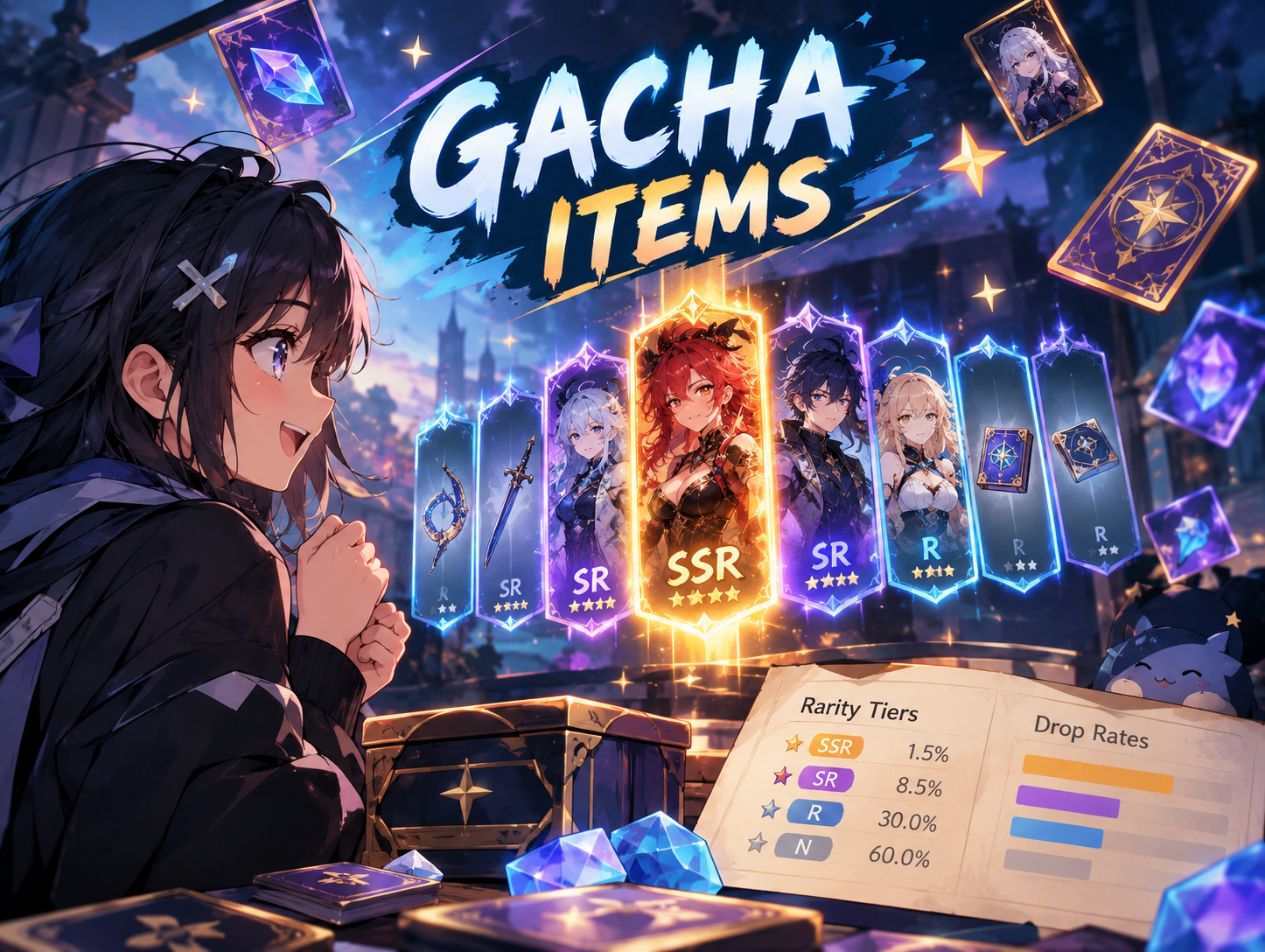
Every gacha game hides its biggest rewards behind a wall of chance, and gacha items are exactly what sits on the other side of that wall. One pull might hand you a game changing character and the very next might give you a duplicate you already own.
This randomness isn’t an accident. It’s a designed system built on rarity tiers, hidden percentages, and pity counters that most players never fully understand.
This guide breaks down exactly what gacha items are, how their drop rates actually work, and how to earn strong ones without spending a rupee.
Quick Answer
Gacha items are randomized in game rewards, such as characters, weapons, or cosmetics, obtained through a virtual capsule machine system. Rarity tiers and hidden drop rates decide what you get. Most games soften the odds with a pity system that guarantees a top tier item after a set number of tries.
What Are Gacha Items in Gaming?
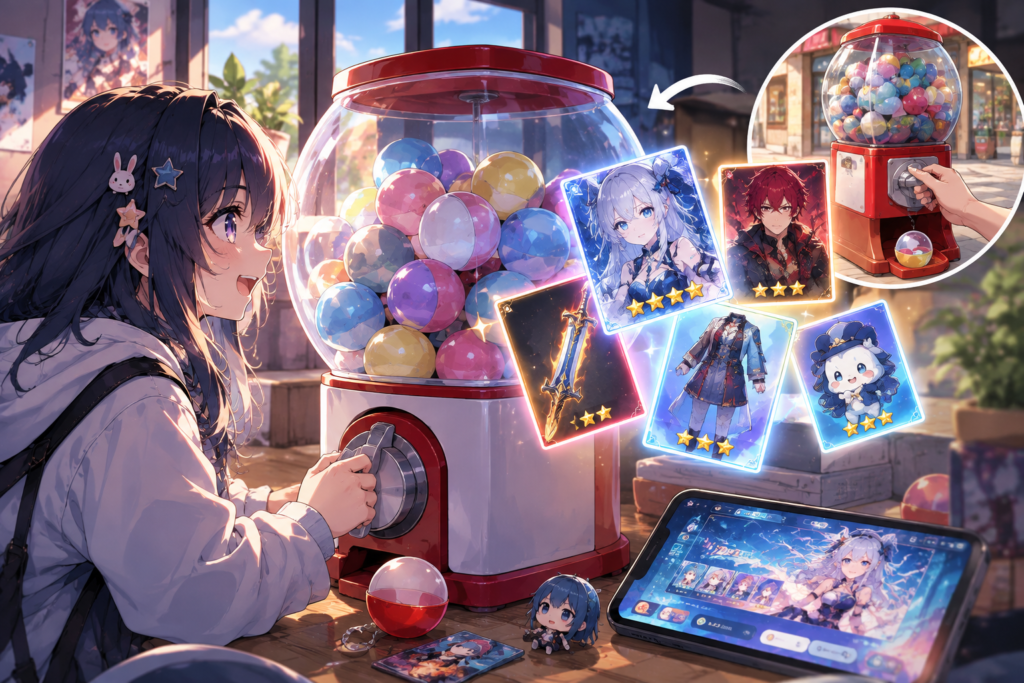
Gacha items are the characters, weapons, outfits, and other rewards players unlock through a randomized pull system. The name comes from Japanese capsule toy machines called gachapon, where you pay, turn a handle, and get a random prize.
In gaming, that same idea plays out digitally. You spend in game currency or real money on a “pull,” and the game’s algorithm decides what lands in your inventory. You might get something amazing, or you might get a duplicate of something you already own.
Gacha items sit at the center of monetization for hundreds of mobile and console titles. The global gacha games market was valued at roughly $577 million in 2026 and is projected to keep growing at a steady pace through the next decade, according to multiple market research firms tracking mobile RPGs.
How Do Gacha Items Work?
Gacha items function through a randomized reward loop where players spend in game currency for a chance to win items from a set pool. Powered by Random Number Generation (RNG), these mechanics rely on fixed percentage odds and public transparency regulations to determine loot outcomes.
The Capsule Vending Machine Concept
Every gacha system is built on the same basic loop. You pay a cost, usually in premium currency, and receive one randomized item from a predefined pool.
Some pools are shared across the whole game. Others are limited time “banners” tied to a specific character or event. Either way, the pool has fixed odds that publishers are increasingly required to disclose.
Random Number Generation (RNG) and Loot Boxes
Behind every pull sits a random number generator that decides the outcome based on published probability tables. A top tier character might have a base rate as low as 0.6 percent per pull in some of the biggest titles on the market.
That low base rate is why gacha items are often grouped with loot boxes in regulatory discussions. Belgium has classified paid loot boxes as illegal gambling since April 2018, with fines reaching 800,000 euros for violations, while other regions are still debating how to handle the mechanic.
Publisher transparency has improved a lot over the past few years. Most major titles now publish exact percentage odds for every rarity tier directly inside the game, a change largely driven by regulatory pressure in markets like China and South Korea.
Main Types of Gacha Items
Gacha pools generally fall into three broad categories, and most games mix all three across different banners.
- Playable characters and heroes that unlock new combat abilities or team synergies
- High rarity weapons and gear that boost stats or unlock special skills
- Cosmetic skins and customization assets that change appearance without affecting gameplay
Playable Characters and Heroes
Character pulls are usually the headline attraction. A new character often comes with a unique kit, voice lines, and a story arc, which is why limited banners built around a single hero tend to draw the heaviest spending.
High Rarity Weapons and Gear
Weapon banners run in parallel to character banners in many games. They matter less for storytelling but can make a bigger difference to raw combat performance, especially for min maxing players.
Cosmetic Skins and Customization Assets
Cosmetic only gacha items are the most common ground for regulators to treat more leniently, since they don’t affect competitive balance. They still drive significant revenue because collection and self expression are powerful motivators on their own.
Some games blend the two ideas, letting a single character pull unlock both a new playable unit and an exclusive cosmetic variant. This dual reward structure is one reason character banners consistently outperform standalone cosmetic banners in revenue.
Understanding Gacha Item Rarities and Drop Rates
Gacha games categorize items into distinct rarity tiers to balance reward frequency and maintain gameplay progression. Understanding base drop rates alongside guaranteed pity mechanics helps players manage their pull strategies and accurately estimate the resources needed for top tier rewards.
Common, Rare and Super Rare (SSR) Tiers
Most systems use a three or four tier ladder. Common items drop constantly, rare items show up occasionally, and the top tier, often labeled SSR, UR, or five star, is deliberately scarce.
Standard base rates for that top tier commonly sit between 0.6 percent and 2 percent per single pull across major titles. Multi pull bundles, usually ten at a time, often guarantee at least one item from the mid rare tier so players never walk away completely empty handed.
How Pity Systems and Soft Pity Guarantee Items?
A pity counter tracks every pull since your last top tier item. Once you cross a “soft pity” threshold, often somewhere between 60 and 75 pulls, your odds jump sharply with each additional try.
If you still haven’t hit a top tier item by a fixed “hard pity” number, commonly 80 or 90 pulls, the next pull is guaranteed to deliver one. Thanks to soft pity, the real average number of pulls needed is usually much lower than the hard pity ceiling, often somewhere in the 60s rather than the 90s.
Popular Games That Feature Gacha Items
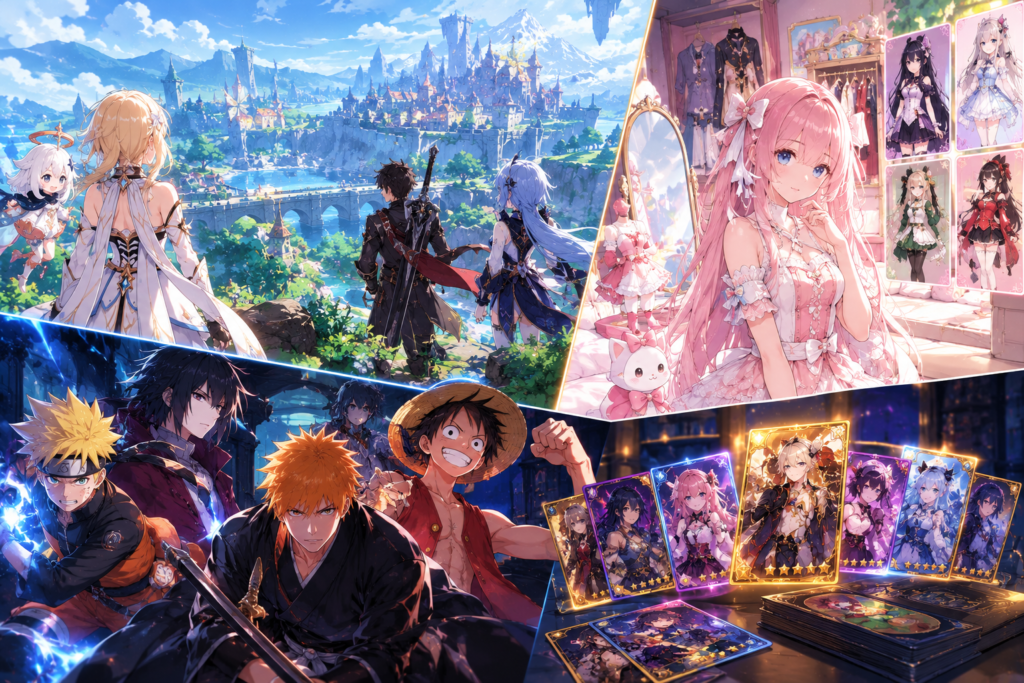
Gacha items drive the core progression and revenue across various popular genres, from open world anime RPGs to casual dress up games. Whether collecting power boosting equipment or purely cosmetic outfits, these mechanics define how players unlock new content across modern titles.
Anime RPGs and Open World Games
Anime style RPGs are the biggest home for gacha items today. One open world title in this genre reportedly crossed ten billion dollars in lifetime player spending by the end of 2025, a milestone tracked by mobile analytics firms as the fastest any single game has reached that number. Another long running anime RPG has accumulated roughly seven billion dollars over its lifetime.
Dress Up and Character Customization Games
A separate wing of gacha games skips combat entirely, focusing instead on collecting outfits, accessories, and characters for creative or social play. Often featured among the most popular gacha games on switch these titles rely almost entirely on cosmetic gacha items rather than power-boosting gear, keeping the mechanic lower stakes for casual players.
Card based strategy games form a third lane, where gacha items are trading card style units rather than 3D characters. This format has produced some of the fastest debut earnings in the industry, with one card collecting mobile title reportedly banking over a billion dollars in its first year alone.
How to Get Free Gacha Items Without Spending Money?
Every major gacha game gives free players a path to top tier items without paying.
- Complete daily and weekly missions for premium currency drips
- Save currency for rate up banners instead of pulling on standard ones
- Log in during limited events, which usually hand out bonus pulls
- Finish the main story campaign, since most games front load free currency there
- Join or follow official social channels, where codes for free pulls are common
Patience matters more than luck here. Stacking currency for a specific rate up banner, rather than pulling the moment you can afford one try, is the single biggest lever a free to play player has.
Is Buying Gacha Items Worth It?
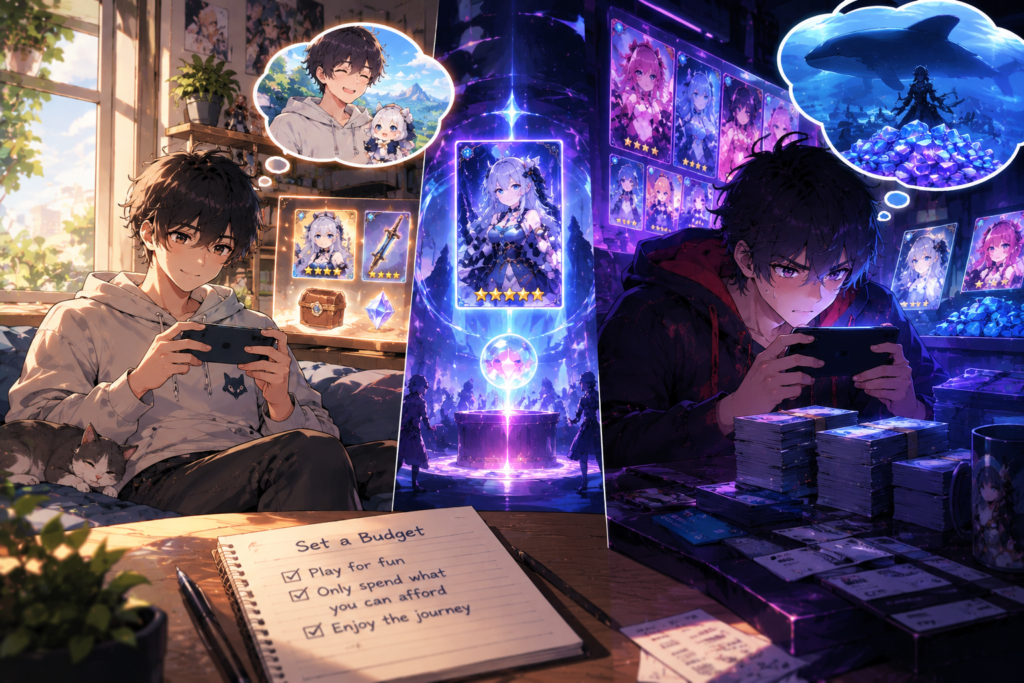
The honest answer depends entirely on the player. Someone who plays a few minutes a day and enjoys casual progress rarely needs to spend anything, since pity systems guarantee eventual rewards.
Players chasing every limited character, however, can spend heavily. Reports on top spending “whale” players in major titles describe accounts with spending well into the thousands of dollars over a game’s lifetime. Before spending, it helps to set a hard budget in advance and treat any pull past that budget as optional rather than necessary for progress.
Conclusion
Gacha items turn simple randomness into one of gaming’s most engaging and controversial systems. Understanding rarity tiers, drop rates, and pity mechanics puts you back in control of the pull button instead of the other way around. Whether you’re a free player grinding toward a guaranteed pity pull or someone weighing a purchase, knowing the math behind the machine is the best tool you have.
FAQs
What is the #1 gacha game?
Rankings shift constantly but anime style open world RPGs currently lead global gacha revenue charts.
What are the best gacha mods?
Most official communities discourage mods since they can violate terms of service and risk account bans.
Is Gacha Club safe for 10 year olds?
It carries a general audience rating though parents should still review in app chat and purchase settings first.
Is gacha legally gambling?
It depends on the country since Belgium bans paid loot boxes outright while most other regions currently allow them.
Is a gacha game safe to play?
Yes for gameplay itself though players should always set spending limits before pulling on any banner.
Which gacha app is better?
There’s no single answer since the right pick depends on whether you prefer combat depth, story, or casual collection.
Is gacha the same thing as a slot machine?
This is a common misconception. Gacha items always deliver a usable in game reward, while slot machines can return nothing at all, which is the key legal distinction regulators use.


Pingback: Owl Girl Gacha Game Glasses: Best Ultimate Design Guide
Pingback: Gacha Mods: Games, Features android Safety & Guide