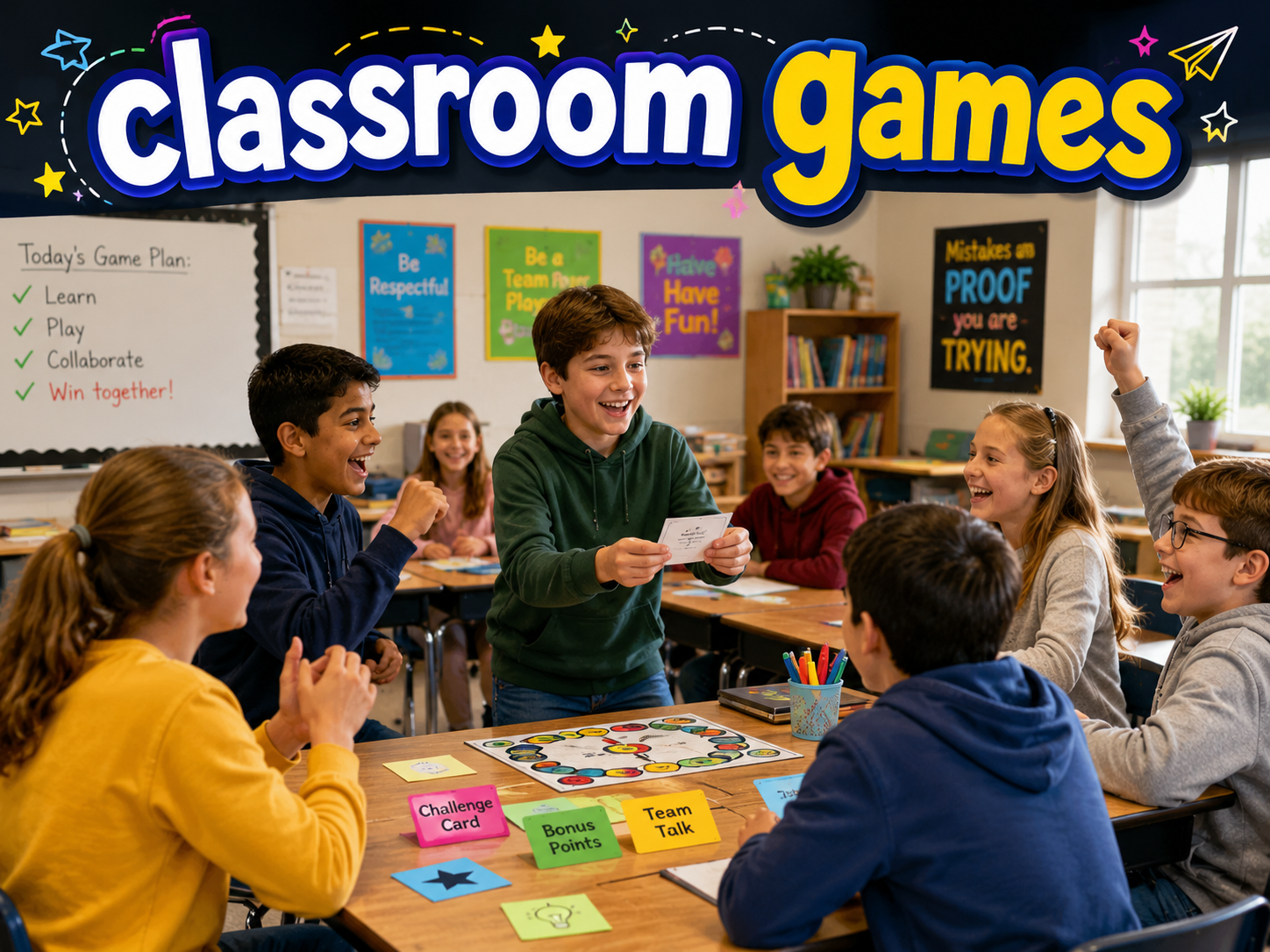
The best lesson you ever taught probably did not feel like a lesson at all. It felt like a game.
Classroom games transform passive sitting into active participation. Laughing, competing, and collaborating helps students absorb information faster and retain it longer. Research from the Journal of Educational Psychology shows game based learning improves retention by up to 90% compared to lectures.
This guide covers 25 classroom games organized by grade level, subject, preparation time and setting. You will find no prep brain breaks, digital review platforms and management strategies that keep energy high without losing control of the room.
Top 5 No Prep Classroom Games for Quick Brain Breaks
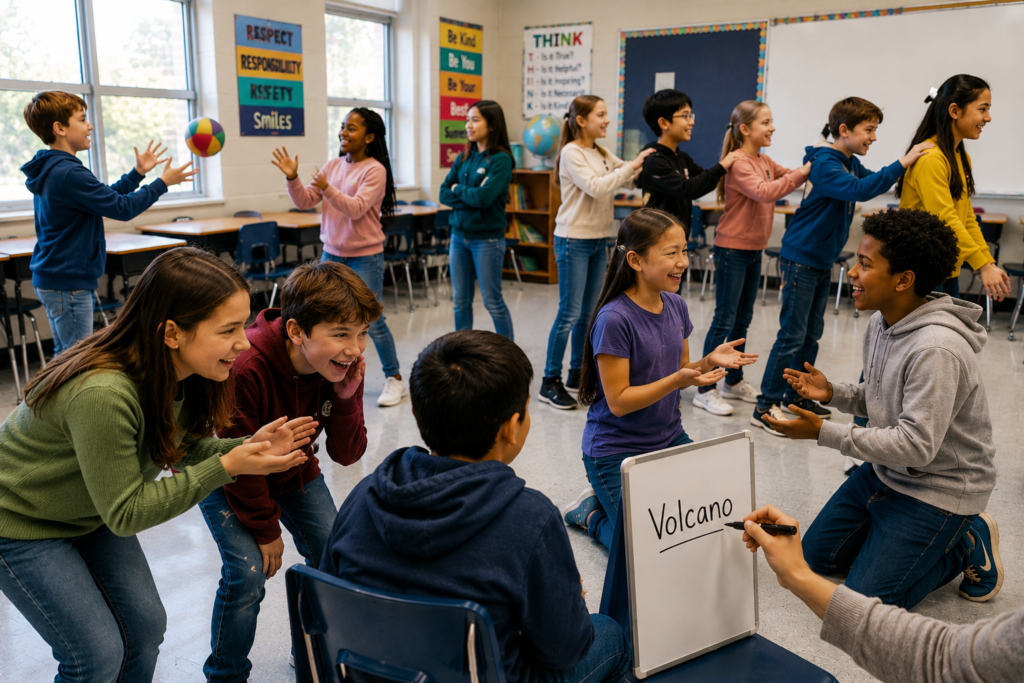
These five games need zero materials, zero setup and zero advance planning. Pull any of them out whenever energy drops and you need the class reset in under two minutes.
Silent Ball
Students toss a soft ball across the room in complete silence. Anyone who speaks, drops the ball or makes a bad throw sits down immediately.
Silent Ball builds self control, focus and nonverbal communication at the same time. It works equally well as a five minute brain break or a full period reward activity for any grade level from kindergarten through grade twelve.
Best for: Grades K to 12 | Prep: Zero | Space: Indoor classroom
Four Corners
Label your four classroom corners with numbers or colors. One student closes their eyes in the center while everyone else quietly moves to a corner of their choice.
The middle student calls a corner and everyone there sits down. This game burns physical energy without leaving the room and requires no materials whatsoever beyond your existing classroom space.
Best for: Grades K to 8 | Prep: Zero | Space: Indoor classroom
Hot Seat
One student sits facing away from the board while the teacher writes a vocabulary word, historical figure or science term behind them.
Classmates give clues using synonyms, definitions or descriptions without saying the actual word. This game builds vocabulary and recall while generating genuine excitement across every subject area.
Best for: Grades 3 to 12 | Prep: Zero | Space: Indoor classroom
Line Up
Students arrange themselves in a specific order alphabetically by middle name, by birthday month or by shoe size without speaking a single word throughout the entire activity.
This game requires creative nonverbal problem solving and teaches communication, leadership and patience simultaneously. It works especially well as a transition activity or community building warm up at the start of class.
Best for: Grades 2 to 10 | Prep: Zero | Space: Indoor or hallway
Would You Rather
The teacher poses a two option question and students physically move to opposite sides of the room based on their choice. After choosing sides, pairs discuss and defend their decisions.
This works as a speaking and listening warm up, a debate skill builder or a pure energizer between heavier academic segments. Topics scale instantly to match any grade level or subject area.
Best for: Grades 1 to 12 | Prep: Zero | Space: Indoor classroom
High Engagement Academic Review Games
These games make test prep feel like competition time while covering genuine curriculum content. Students leave these activities having reviewed material they would normally resist during traditional instruction.
Best Math and Fact Fluency Games
Around the World is a fast paced math fact challenge where two students compete to answer first. The winner moves to challenge the next student until someone circles the entire room back to their original seat.
Trashketball turns any review question into a basketball moment. Answer correctly and earn a shot closer shots earn one point and farther shots earn two or three. Students consistently rate this as their favorite review game across all grade levels.
Both games work for multiplication, division, vocabulary definitions and any content where fast recall matters. Zero props are needed beyond a rolled up piece of paper for the shot attempt.
Best ELA and Spelling Games
Sparkle places students in a circle where they take turns saying one letter of an assigned spelling word. The student after the final letter says sparkle and the next person sits down. It builds spelling recall through repetition without feeling like practice.
Academic Charades works exactly like standard charades but uses vocabulary words, literary characters, historical figures or science concepts instead of movies and celebrities. Teams earn points for correct guesses within a set time limit.
Password pairs students who give one word clues to help a partner guess a key term. The fewer clues needed the more points earned. This creates genuine strategic thinking around vocabulary rather than simple memorization.
Science and History Review Games
Pictionary with curriculum content forces students to draw scientific processes, historical events or geographic features while teammates guess correctly. Drawing requires conceptual understanding rather than simple surface level recall.
Mystery Box gives students increasingly specific clues about a hidden object or image until someone identifies it correctly. This works brilliantly for introducing new science units and historical periods through curiosity driven discovery.
Best Digital and Interactive Classroom Games
Digital classroom games turn any device into a game show buzzer across phones, tablets, and laptops. For students accessing popular browser titles during free time platforms like Unblocked Games 66 provide instant device friendly access.
Game Show Style Platforms
Kahoot is the most recognized classroom game platform globally with over 300 million users according to Kahoot’s 2025 usage report. Teachers create quiz shows that students join through a simple game code on any device.
Blooket offers multiple game modes beyond standard quiz format including tower defense, gold mining and battle royale formats all powered by the same question set. Students who finish early have built in incentive to keep playing.
Quizizz allows self paced play where students work through questions independently rather than waiting for the class simultaneously. Memes and sound effects appear after each answer keeping individual engagement high throughout.
Gimkit is particularly strong for vocabulary heavy subjects because it rewards correct answers with in game currency that students spend on power ups during play. The economic layer creates sustained engagement across longer review sessions.
How to Integrate Smartboards in Classroom Gameplay?
Smartboards transform whole class games by making student answers instantly visible to everyone at the front of the room. This creates natural discussion moments when the class disagrees on an answer.
Drag and drop activities on smartboards work exceptionally well for sorting and categorizing games in science and social studies. Students take turns coming forward while classmates coach from their seats turning individual performance into team collaboration.
Classroom Games by Grade Level
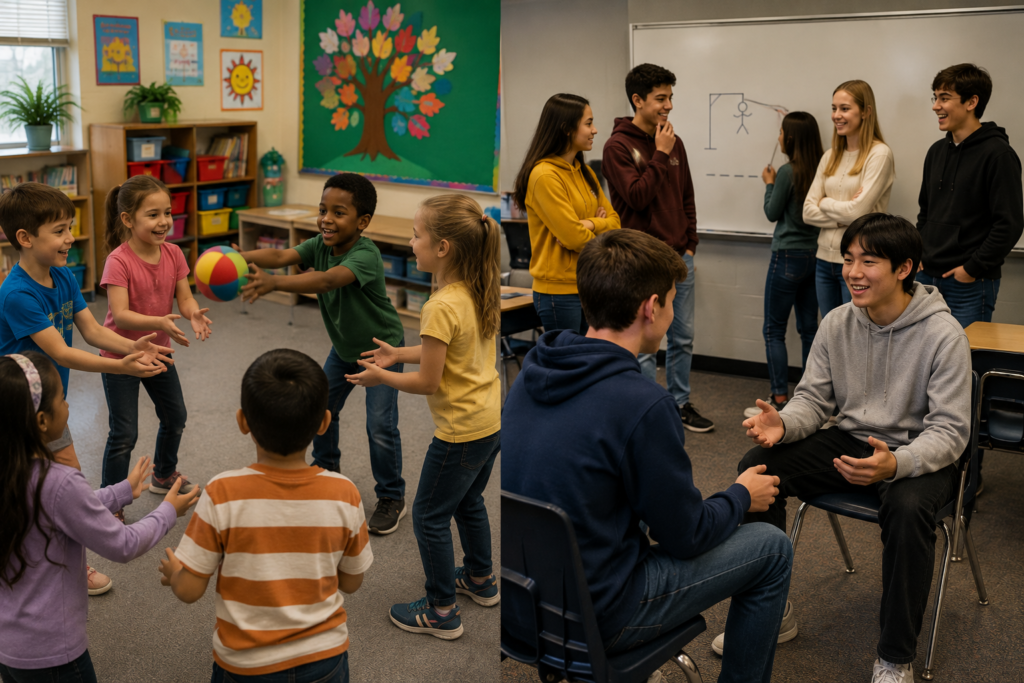
Understanding which games work for which ages prevents mismatched energy and frustration for both students and teachers. A game perfect for fifth graders may completely fall flat with high schoolers.
Best Games for Elementary School Grades K to 5
Elementary students need physical movement built into their games. Silent Ball, Four Corners, Would You Rather and Around the World all deliver the movement and stimulation younger learners need to sustain focus.
Sparkle works particularly well in grades two through five when spelling curriculum demands regular practice. The standing circle format naturally creates accountability without the pressure of individual written quizzes that younger students find stressful.
Best Games for Middle and High School Grades 6 to 12
Older students respond strongly to competition, strategy and autonomy. Kahoot, Blooket and Gimkit all provide competitive leaderboards that resonate with this age group far more than movement based elementary games.
Hot Seat and Academic Charades scale beautifully into secondary content because vocabulary complexity increases naturally with subject difficulty. High school teachers report that Trashketball remains unexpectedly popular even with students who consider themselves too old for classroom games.
Indoor vs Outdoor Classroom Games
Choosing between indoor and outdoor settings depends on class size, available space and the energy level you are trying to manage rather than just weather conditions.
Adapting Indoor Space for High Energy Games
Push desks to the walls to create a central floor space for movement games in standard classrooms. Even a narrow aisle between rows creates enough space for Four Corners and Would You Rather without requiring a gymnasium.
Noise levels are the primary challenge with indoor high energy games. Using a visual timer and a clear signal like a bell or clap pattern gives students a countdown they can see rather than a command they might not hear.
Outdoor Movement Games for Brain Reset
Taking games outside changes the energy dynamic completely for students who have been sitting for extended periods. Simple outdoor adaptations of indoor games like a larger scale Four Corners or a whole class Silent Ball circle work without any additional materials.
Outdoor sessions work best as planned transitions rather than spontaneous breaks. A five minute notice gives students time to mentally shift modes which consistently results in smoother outdoor sessions and easier returns to indoor focus.
Teacher’s Guide to Classroom Management During Games
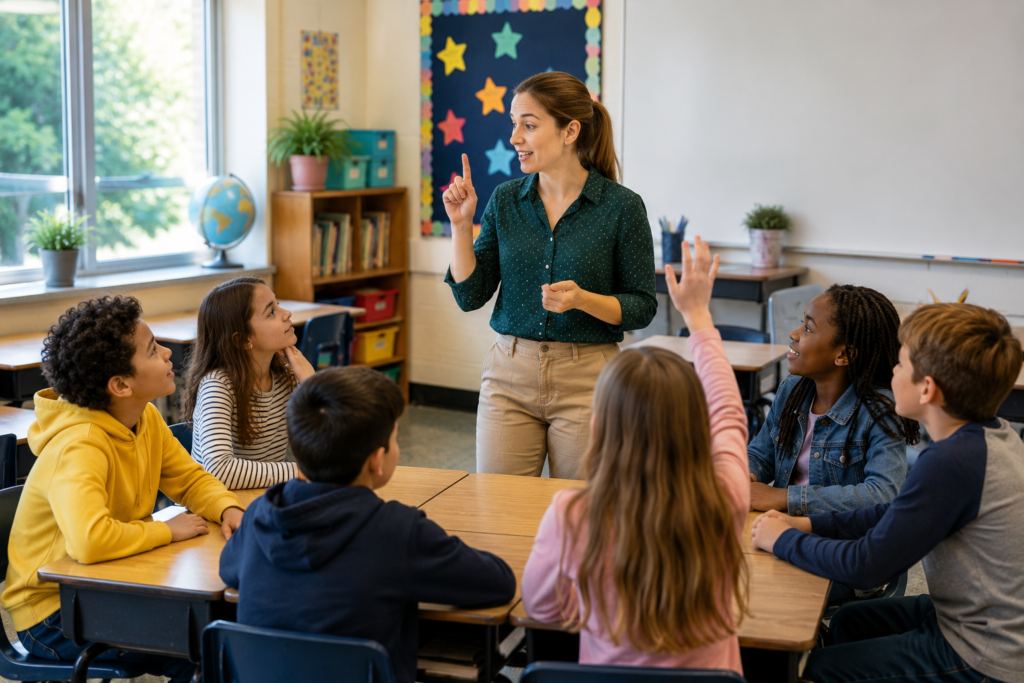
Games fail when rules are unclear and consequences are inconsistent. Establishing three things before any game starts prevents most management problems from occurring mid activity.
State the winning condition clearly before play begins. Students need to know exactly what they are working toward or competition turns into confusion quickly. Write the goal on the board so it remains visible throughout.
Define the noise boundary explicitly. Whether that means inside voices, silent movement or controlled cheering give students a specific behavior target rather than a vague instruction like be quiet. Specific expectations produce specific compliance.
Keep reset procedures short. If a game needs to be paused use a single consistent signal and give students exactly thirty seconds to reset before play resumes. Longer pauses lose momentum and make it harder to re engage the class.
Conclusion
Classroom games work because they transform the emotional context of learning. The same vocabulary words that bore students in a worksheet become something worth competing over when points and pride are involved.
Start with one no prep game this week Silent Ball or Would You Rather work for any subject and any grade. Notice how your class responds and build from there. The best classroom game collection is one you actually use consistently rather than the most elaborate one you can find.
FAQs
What are the best classroom games that require no preparation?
Silent Ball, Four Corners, Would You Rather, Hot Seat and Line Up all require zero materials or setup time.
Which digital platform is best for classroom games?
Kahoot is the most widely used but Blooket and Gimkit offer more game variety for sustained engagement.
What classroom games work best for high school students?
Kahoot, Blooket, Trashketball, Hot Seat and Academic Charades consistently engage secondary students across all subjects.
Are classroom games effective for actual learning?
Yes research shows game based learning improves retention rates by up to 90% compared to passive instruction methods.
Which classroom games work best for math review?
Around the World and Trashketball are the strongest math fact fluency and test review games available.
Do classroom games only work for younger students?
No well designed competitive games engage high school students as effectively as elementary students when properly matched to age and content.